
What is UPSC Civil Services Examination?
The Union Public Service Commission Civil Services Examination, commonly known as UPSC CSE, is India’s most prestigious competitive examination. Every year, lakhs of candidates appear for this examination with the dream of becoming IAS, IPS, IFS, IRS and other respected civil servants who contribute directly to the governance and development of the country.
Unlike many competitive examinations that focus only on academic knowledge, UPSC evaluates a candidate’s overall personality, analytical ability, leadership qualities, ethical values, communication skills and decision-making capabilities. This makes the examination unique and highly respected throughout India.
Civil servants selected through UPSC hold important positions in administration, law enforcement, foreign affairs, taxation, policy implementation and public service delivery. Their decisions often affect millions of citizens and play a significant role in nation-building.
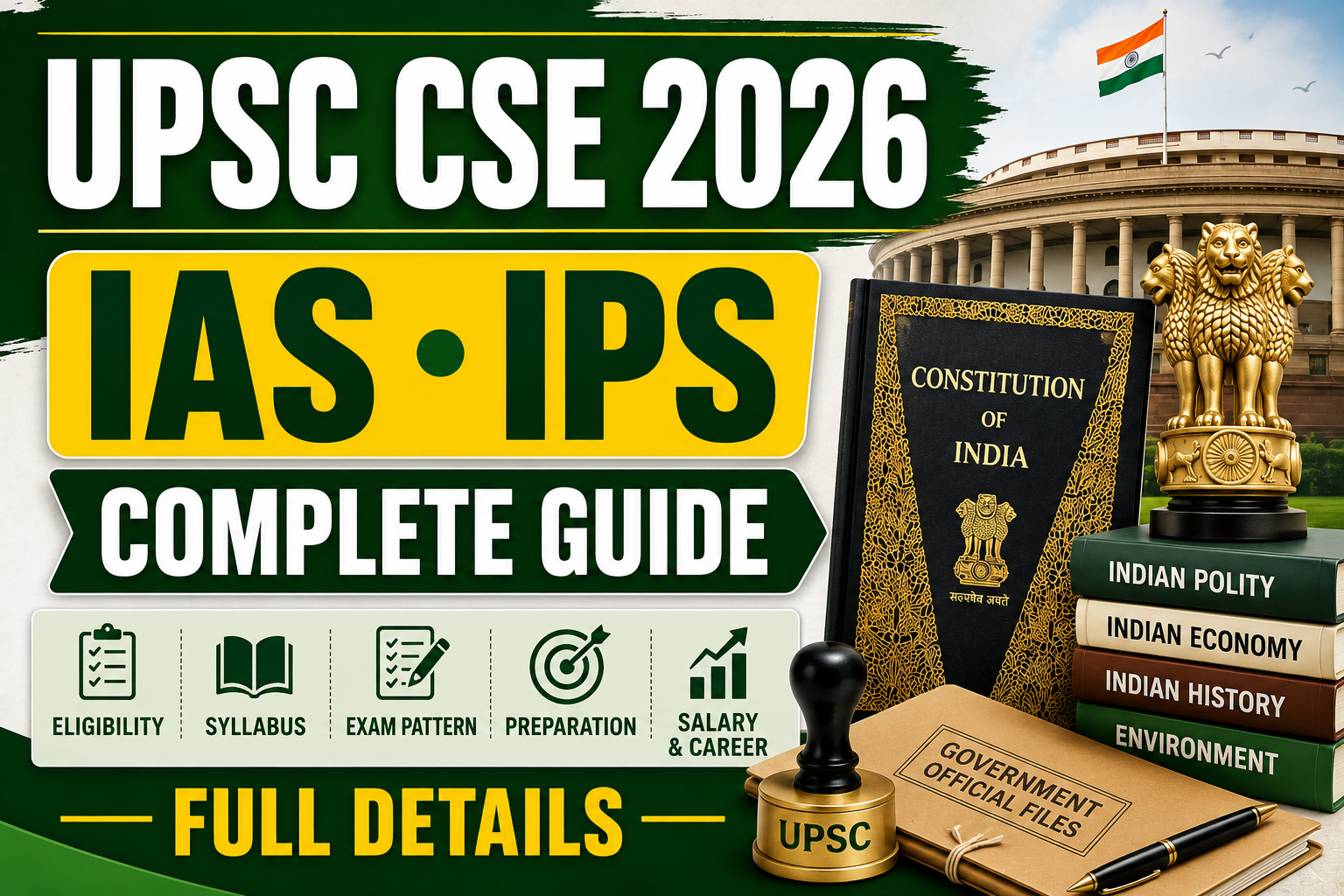
Why Do So Many Students Dream of Becoming IAS or IPS?
- Opportunity to serve the nation.
- High social respect and recognition.
- Strong leadership responsibilities.
- Excellent career growth opportunities.
- Attractive salary and benefits.
- Job security.
- Direct impact on public welfare.
- Administrative authority.
- Diverse work experience.
- Long-term career stability.
For many aspirants, civil services represent more than just a job. It is an opportunity to contribute meaningfully to society while enjoying a challenging and rewarding career.
UPSC Full Form and Role
UPSC stands for Union Public Service Commission. It is a constitutional body responsible for conducting recruitment examinations and selecting candidates for various services under the Government of India.
The commission ensures a transparent, fair and merit-based recruitment process. Apart from Civil Services Examination, UPSC also conducts examinations for engineering services, defence services and various specialized government positions.
UPSC Eligibility Criteria
| Criteria | Requirement |
|---|---|
| Qualification | Bachelor’s Degree |
| Minimum Age | 21 Years |
| Maximum Age | 32 Years (General) |
| Nationality | Indian Citizen (IAS/IPS) |
UPSC Selection Process
- Preliminary Examination
- Main Examination
- Personality Test (Interview)
Candidates must clear all three stages successfully to secure a final rank and service allocation.
Services Through UPSC Civil Services Exam
| Service | Role |
|---|---|
| IAS | Administration & Policy |
| IPS | Law & Order |
| IFS | Foreign Affairs |
| IRS | Tax Administration |
UPSC Preparation Strategy
Successful UPSC preparation requires consistency, patience and a long-term approach. Candidates should first understand the syllabus thoroughly and then build a strong foundation using NCERT books and standard reference materials.
- Read NCERT books.
- Study current affairs daily.
- Practice answer writing.
- Attempt mock tests regularly.
- Make concise notes.
- Revise frequently.
- Focus on conceptual clarity.
UPSC Salary and Benefits
| Position | Approx Salary |
|---|---|
| Entry Level Officer | ₹56,100+ |
| Senior Officers | ₹1 Lakh+ |
| Cabinet Secretary | ₹2.5 Lakh |
Final Conclusion
UPSC Civil Services Examination is one of the most respected career paths in India. While the journey is challenging, candidates who prepare with discipline, consistency and determination can achieve remarkable success. More than a job, civil services offer an opportunity to lead, serve and contribute to the development of the nation.